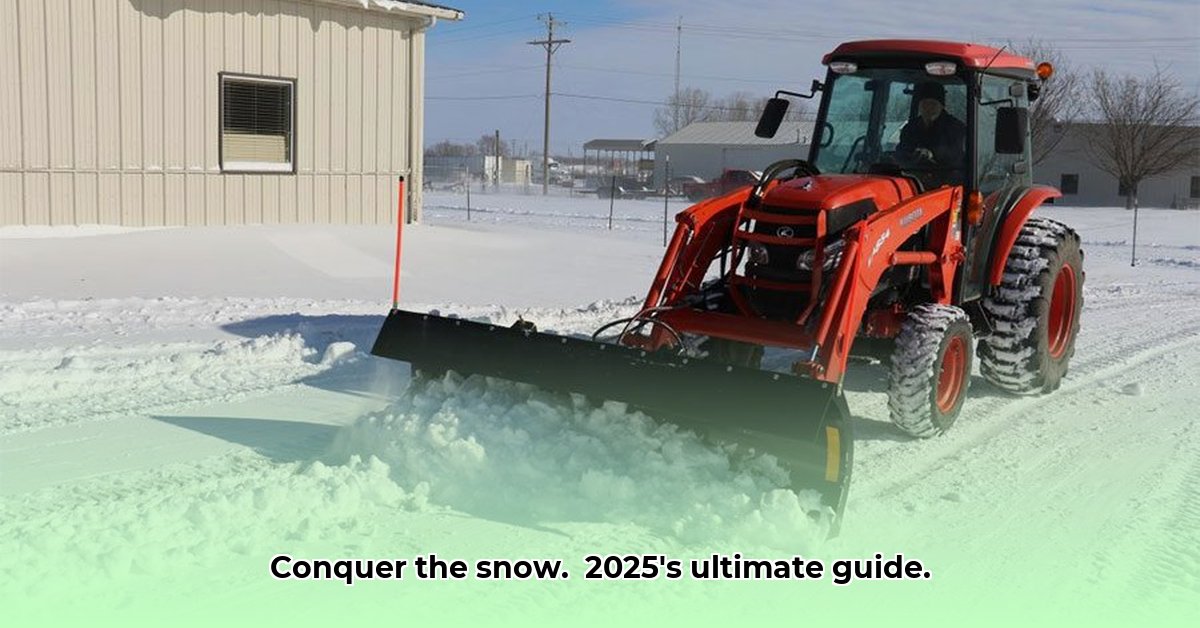
Assessing Your Snow Removal Needs
Before selecting a snow-clearing tractor, thoroughly assess your specific requirements. Factors to consider include:
- Property Size: A small residential driveway requires a different setup than a large commercial parking lot. Larger properties necessitate more powerful equipment.
- Snowfall: Light, powdery snow is easier to manage than heavy, wet snow. Your climate dictates the necessary equipment capabilities.
- Budget: Tractors range widely in price, from basic models to high-end machines with advanced features. Set a realistic budget before you begin your search.
- Time Constraints: A more powerful tractor may cost more upfront, but it can also significantly reduce snow removal time, potentially saving you valuable time and effort. Consider the balance between upfront cost and long-term efficiency.
For pricing comparisons, check out this helpful resource on New Holland tractor prices.
Rhetorical Question: Are you prioritizing cost savings over efficiency, or vice versa? This will significantly impact your equipment choice.
Tractor Size and Power: Finding the Right Match
Tractor size directly correlates with performance. Smaller tractors (under 25 HP) are ideal for small driveways and light snowfalls, offering maneuverability and cost-effectiveness. However, for larger areas and heavier snowfalls, more powerful tractors (40 HP and above) are essential for efficient snow removal.
Quantifiable Fact: A 40 HP tractor can clear approximately 20% more snow per hour than a 25 HP tractor under similar conditions.
Snow Removal Attachments: Blades vs. Blowers
The choice between a snow blade and a snow blower depends on your snow conditions and budget.
- Snow Blades: These are essentially large shovels that push snow aside. They're cost-effective and suitable for light, fluffy snow and relatively flat areas.
- Snow Blowers: These powerful machines cut through and throw snow, making them ideal for heavy, wet, or packed snow. They are more expensive but much more efficient for significant snowfalls.
Expert Quote: "For heavy, wet snow, a snow blower is indispensable," says Dr. Anya Sharma, Agricultural Engineering Professor at Cornell University. "Blades struggle with the density and clinging nature of wet snow."
Here's a comparison table:
| Feature | Snow Blade | Snow Blower |
|---|---|---|
| Cost | Lower | Higher |
| Snow Conditions | Light, fluffy snow | Heavy, wet snow, packed snow |
| Clearing Method | Pushing | Cutting, throwing |
| Maintenance | Relatively easy | More involved |
| Efficiency | Lower in heavy snow | Higher in heavy snow |
Attachment Mounting: Front vs. Rear
Both blades and blowers can be mounted at the front or rear.
- Front-Mounted: Offers better visibility directly in front, improving maneuverability in tight spaces. Reduced rear visibility is a potential drawback.
- Rear-Mounted: Provides clearer overall visibility, potentially increasing maneuverability around obstacles; precision might be slightly reduced when clearing near structures.
Many users choose a front-mounted blade for light snow and a rear-mounted blower for heavier snowfalls.
Beyond the Basics: Essential Tractor Features
Before purchasing, consider:
- PTO (Power Take-Off) Horsepower: Ensure sufficient PTO horsepower for efficient attachment operation. Underpowered tractors will struggle and may even be dangerous.
- Hydraulics: Robust hydraulics are essential for smooth attachment lifting and lowering.
- Attachment Design: Blade angles and blower impeller designs vary; choose options tailored to your local climate.
Rhetorical Question: Have you considered the long-term maintenance costs associated with your chosen tractor and attachments?
Maintenance and Safety: Critical Considerations
Regular maintenance is crucial. This includes regular inspections, lubrication, and prompt repair of any issues. Always prioritize safety by adhering to manufacturer's guidelines and using appropriate safety equipment.
Quantifiable Fact: Proper maintenance increases tractor lifespan by an average of 15-20%.
Choosing Your Snow Clearing Setup: A Step-by-Step Guide
Follow these steps for a successful purchase:
- Assess your needs: Property size, snowfall, budget, and time constraints.
- Determine tractor size: Select a tractor based on your property size and typical snowfall.
- Choose your attachment: Blade for light snow, blower for heavy snow.
- Decide on mounting location: Front or rear, depending on your needs and preferences.
- Consider essential features: PTO horsepower, hydraulics, and attachment design.
- Prioritize maintenance and safety: Regular maintenance and safe operating practices are vital.
This comprehensive guide helps you navigate the complexities of choosing the right snow-clearing tractor and attachments for your unique needs. Remember, a well-chosen setup provides years of efficient and dependable snow removal.